
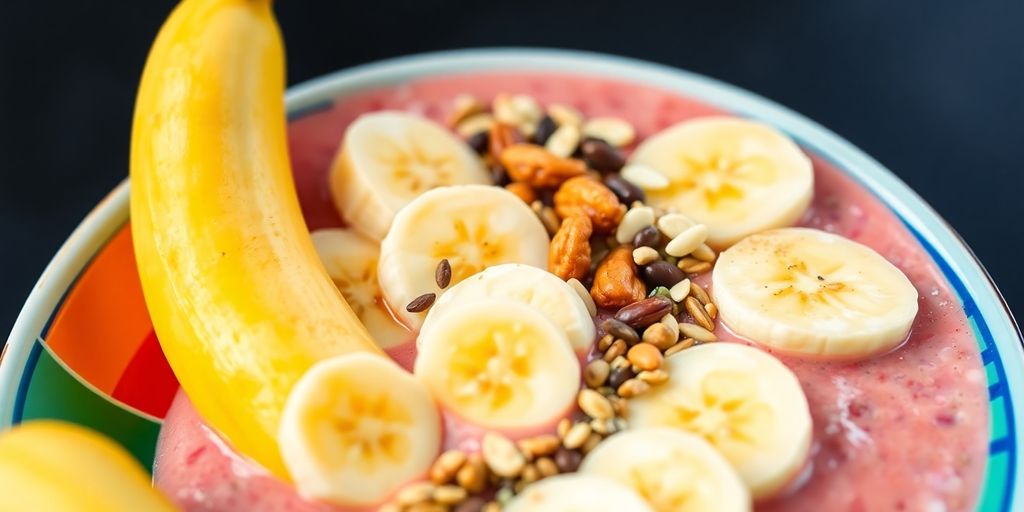
If you’re looking for a simple way to build a more filling, lower-effort breakfast or snack into your routine, a banana smoothie made from just three ingredients is a genuinely useful place to start. This isn’t a miracle food or a magic diet: it’s one recipe you can make in under five minutes with a banana, a source of healthy fat, and a source of protein.
By the end of this article, you’ll have the exact recipe, a few real variations, an honest explanation of why this combination works the way it does, and a realistic sense of what to expect if you make it part of your routine.
TL;DR
- The core recipe is 1-2 bananas, one tablespoon of a healthy fat (nut butter, avocado, or chia seeds), and one serving of a protein source (Greek yogurt or protein powder), blended with water or milk.
- Slightly underripe bananas contain more resistant starch and have a lower glycemic index than fully ripe ones, which may support satiety, but both are fine to use.
- The CDC considers 1 to 2 pounds a week a safe, realistic pace for weight loss overall – no single recipe changes that math on its own.
- This smoothie is a recipe, not a complete diet plan; it works best alongside a generally balanced way of eating, not as a replacement for it.
- Talk to a doctor before making major changes to your diet, especially if you have diabetes or another condition affected by blood sugar or calorie intake.
The 3-Ingredient Banana Smoothie Recipe
Ingredients
- 1-2 bananas (fresh or frozen; see the ripeness note below)
- 1 tablespoon of a healthy fat: natural peanut butter, almond butter, half a small avocado, or 1 tablespoon of chia or flax seeds
- 1 serving of a protein source: 1/2 cup plain Greek yogurt, 1 scoop of your usual protein powder, or 1/4 cup cottage cheese
- Optional: 1/2 cup water, milk, or a milk alternative to reach your preferred consistency
Instructions
- Peel the banana(s) and add to a blender. Using frozen banana slices gives a thicker, colder texture similar to soft-serve.
- Add your chosen healthy fat and protein source.
- Add liquid a little at a time and blend until smooth, adjusting until you get the consistency you like.
- Taste and adjust: a pinch of cinnamon, a small amount of cocoa powder, or a few ice cubes can change the flavor and texture without adding much sugar.
Why This Combination Works
Bananas on their own are relatively quick to digest, which means a banana-only snack can leave you hungry again fairly soon. Adding a fat source and a protein source changes that. Protein and fat both slow gastric emptying, the rate at which food leaves your stomach, which is part of why a meal or snack with all three macronutrient types tends to keep you satisfied longer than fruit alone.
This is standard nutrition science, not something specific to bananas. The same principle applies to pairing any fruit with a fat and a protein source. Bananas are simply a convenient, inexpensive, widely available fruit to build the habit around.
A quick note on sugar. A medium banana has around 14 grams of naturally occurring sugar. That’s not the same as added sugar, and the fiber in a banana slows how quickly that sugar is absorbed compared to, say, fruit juice. Still, if you’re watching total sugar intake for a medical reason, talk to your doctor or a registered dietitian about how a banana smoothie fits into your day.
Ripe or Unripe Bananas? What the Research Actually Shows
You’ll often see it claimed that “greener” bananas are better for weight loss, and there’s real evidence behind that, though it’s worth understanding what it actually says.
As bananas ripen, their starch converts into simple sugars. Unripe bananas can be made up of 70-80% resistant starch by dry weight, while fully ripe bananas contain only about 1% starch, according to Healthline’s review of the research. Resistant starch behaves more like fiber than sugar in digestion: it resists breakdown in the small intestine, which is part of why unripe bananas have a lower glycemic index (around 30) than well-ripened ones (around 60) (Healthline, reviewed by a registered dietitian). A lower glycemic index generally means a slower rise in blood sugar after eating.
That resistant starch and the pectin in green bananas have also been linked to increased fullness after eating, potentially because they slow stomach emptying (Healthline). A peer-reviewed study in diabetic patients similarly found that consuming green-banana biomass was associated with measurable metabolic benefits, supporting the general idea that less-ripe bananas behave differently in the body than ripe ones (Nakajima et al., Scientific Reports, 2020).
What this means practically: using a slightly underripe (yellow with a little green, not fully spotted) banana may support fullness a bit more than an overripe one. It’s not a dramatic difference, and a ripe banana still works fine in this recipe, especially if you prefer the sweeter taste. Don’t let banana ripeness become something to overthink.
Real Variations to Try
- Chocolate peanut butter: 1 banana, 1 tablespoon natural peanut butter, 1 scoop chocolate or unflavored protein powder, 1 teaspoon unsweetened cocoa powder, water or milk to blend.
- Berry and Greek yogurt: 1 banana, 1/2 cup frozen mixed berries, 1/2 cup plain Greek yogurt, water or milk to blend.
- Tropical: 1 banana, 1 tablespoon chia seeds, 1/4 cup canned light coconut milk, a pinch of cinnamon, water to blend.
Is This a “Diet,” or Just a Smart Recipe?
It’s worth being clear about what this article is and isn’t describing. There’s a specific, named trend called the morning banana diet (sometimes called the Asa-banana diet), which started in Japan and involves eating only bananas and room-temperature water at breakfast, with no other restrictions the rest of the day. That’s a different, more structured approach than what’s described in this article.
The recipe above is a single smoothie you can add to your routine, not a full eating plan. If you’re curious whether smoothie-based diets in general hold up, it’s worth understanding what a smoothie diet actually involves before deciding whether a smoothie-only approach works for sustained weight loss – the short version is that most registered dietitians recommend smoothies as part of a varied diet rather than a stand-alone plan, largely because juicing or blending away the need to chew can make it easier to under-eat other nutrients over time.
What Results to Realistically Expect
The CDC states that a safe, realistic pace of weight loss is about 1 to 2 pounds per week, and that people who lose weight gradually are more likely to keep it off than people who lose weight quickly (CDC, Steps for Losing Weight).
No single recipe, including this one, changes that underlying math. Weight loss happens when you consistently use more energy than you take in over time; a banana smoothie can support that by replacing a less filling or more calorie-dense option, but it isn’t a substitute for an overall eating pattern that fits your calorie needs.
If you replace a typical fast-food or pastry-based breakfast with this smoothie and don’t otherwise change your intake, you may notice modest, gradual results over several weeks, in line with the CDC’s 1-2 lbs/week guidance above, rather than a dramatic short-term drop. Individual results vary widely depending on your starting point, activity level, overall diet, and health conditions.
Common Mistakes to Avoid
- Relying on bananas alone. A banana-only snack digests quickly and won’t keep you full the way the full three-ingredient combination will.
- Skipping the protein or fat. Without one of those two, you lose most of the fullness benefit described above.
- Ignoring portion size. Adding large amounts of nut butter or protein powder “because it’s healthy” can add more calories than you intend. A tablespoon of nut butter, not a heaping scoop, is a reasonable starting point.
- Expecting one recipe to do all the work. This smoothie works best as one part of an overall approach that also includes other simple, filling snack choices, regular movement, and adequate sleep.
FAQ
Is a banana smoothie good for weight loss, or does it have too much sugar?
A banana’s natural sugar comes packaged with fiber, which slows absorption compared to sources like fruit juice or soda. Adding protein and fat slows it further. For most people without a condition that requires close blood sugar management, a banana smoothie made this way is a reasonable choice as part of an overall balanced diet. If you have diabetes or prediabetes, talk to your doctor or a registered dietitian about how it fits your specific needs.
How many bananas should I eat a day to lose weight?
There’s no single correct number that applies to everyone. One to two bananas as part of a smoothie, within an overall diet that matches your calorie needs, is a reasonable starting point for most healthy adults. This isn’t medical advice for your specific situation – see a healthcare provider for personalized guidance.
Should I use ripe or unripe bananas for weight loss?
Either works. Slightly underripe bananas have more resistant starch and a lower glycemic index, which may support fullness a bit more, based on the research cited above. Ripe bananas are sweeter and blend more easily. Use whichever you’ll actually enjoy and stick with.
Can I drink this smoothie every day?
For most healthy adults, yes, as part of a varied diet. Variety in your overall diet matters for getting a full range of nutrients, so treat this as a regular option rather than your only source of breakfast or snacks.
Is this the same as the morning banana diet?
No. The morning banana diet is a specific, more restrictive approach that involves eating only bananas and water at breakfast. This article describes a single smoothie recipe you can add to a normal, varied diet, not a full diet plan.
The Bottom Line
A three-ingredient banana smoothie, built from a banana, a healthy fat, and a protein source, is a simple, well-supported way to make a more filling breakfast or snack. It works because of ordinary nutrition science around fat, protein, and satiety, not because of anything magic about bananas specifically, and it isn’t a shortcut around the basic, gradual math of weight loss. Used consistently as part of an overall balanced diet, it’s a reasonable, low-effort habit to build.
This article is for informational purposes only and is not medical advice. Individual results vary, and typical outcomes are usually more modest than the best-case examples described here. Talk to your doctor or another qualified healthcare provider before starting any new diet, supplement, or exercise program, especially if you have an existing health condition or take medication.